
Houston Personal Injury ATTORNEY
The Dangers of Riding a Motorcycle in Houston, TX
10+
YEARS OF PERSONAL EXPERIENCE
5-Star
RATING ON
GOOGLE REVIEWS
1,000+
CASES AND
CLIENTS
$20 M
IN SETTLEMENTS & VERDICTS
Riding a motorcycle in Houston is far more dangerous than driving a car, and NHTSA data shows riders face higher risk of death in a crash. Harris County’s heavy traffic, constant construction, and high rates of distracted driving push that risk even higher. This article breaks down the crash types, road hazards, and Texas laws that affect your right to compensation after a Houston motorcycle accident.
If you ride a motorcycle in Houston, you already know the risk. You have no steel frame, no airbag, and no seat belt, and in a crash, your body absorbs the impact that a car’s frame would otherwise take. A driver who never looked twice before merging, turning, or opening a car door can leave you facing traumatic brain injury, spinal cord damage, or fractures that change the rest of your life. Recovery often means months of medical treatment, lost income, and mounting bills before you even know the full extent of what you are dealing with.
Houston makes this worse. Constant construction zones on I-45 and I-10, aggressive lane changes on Loop 610, and sudden rainstorms that flood the roads all raise the odds of a serious crash.
Even when the crash is clearly the other driver’s fault, insurance companies routinely blame the motorcyclist to reduce or deny the claim, and Texas’s comparative fault rule means any percentage of blame assigned to you comes directly out of your compensation. Without the right evidence and legal strategy, riders often accept far less than their injuries are actually worth.
This article is here to help you understand what you are up against and what to do next. In this article, you will discover the crash types and road hazards that make Houston especially dangerous for riders, the Texas laws that affect your right to compensation, and how a Houston motorcycle accident attorney can help you pursue full and fair recovery.
How Risky Is Riding a Motorcycle in Houston?
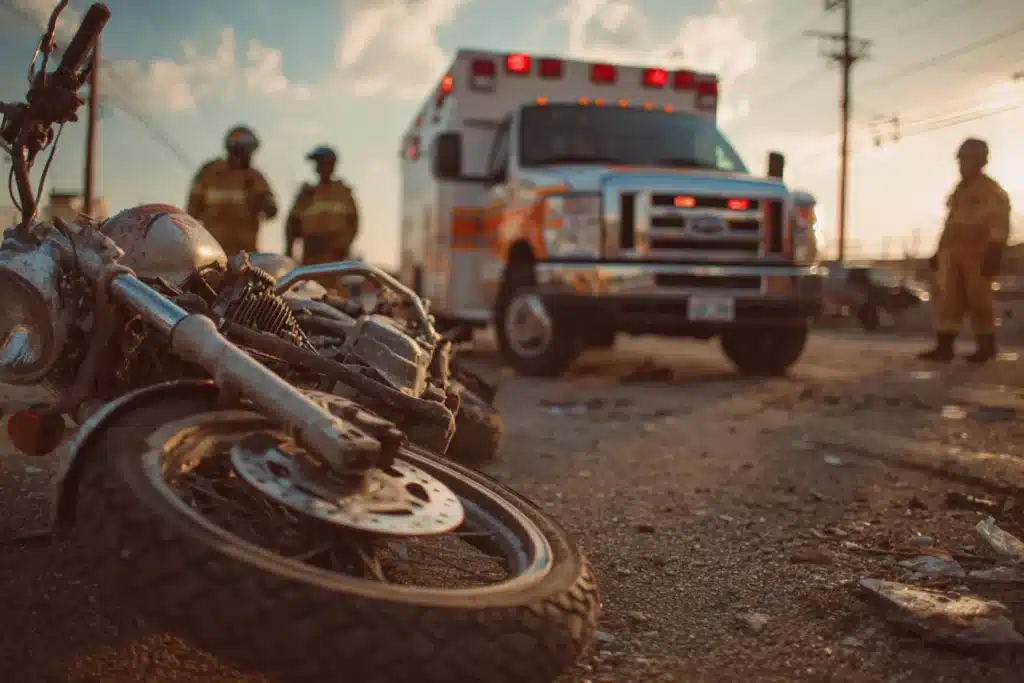
Riding a motorcycle in Houston is one of the most dangerous things you can do on a public road. You have no steel frame, no airbag, and no seat belt, and in a collision, your body absorbs the impact that a car’s frame would otherwise take.
Houston’s size, traffic volume, and road conditions make it more dangerous than most cities in the country.
Why Motorcycle Crashes Turn Deadly
The physics are simple and brutal. When two cars collide, their steel frames absorb most of the force. When a car hits you on a motorcycle, there is nothing between you and the impact.
This is why motorcycle accidents so often produce what the law calls catastrophic injuries, injuries severe enough to permanently change your ability to work and live independently:
- Traumatic brain injury (TBI): Damage to the brain from direct or rotational force, even with a helmet on
- Spinal cord damage: Injuries that can lead to partial or complete paralysis
- Road rash and burns: Deep skin and tissue loss from sliding across pavement, often requiring skin grafts
- Fractures and amputations: Bones shattered on impact, sometimes requiring amputation and leaving permanent disability
Most Dangerous Crash Types for Riders in Houston
Understanding how crashes happen helps you ride more defensively, and helps us build your case if one happens to you.
- Left-turn collisions: A driver turns left directly across your path. This is the single deadliest crash type for motorcyclists.
- Rear-end impacts: A distracted driver strikes you from behind while you are stopped or slowing, launching you into traffic.
- Single-vehicle crashes: You lose control after hitting a road hazard, such as gravel, a pothole, standing water, or a metal plate in a construction zone.
- Head-on collisions: Rare, but almost always fatal because of the combined speed of both vehicles.
The crash type is usually the starting point for any legal claim. It determines who was at fault and what you may be entitled to recover.
Why Houston Is Especially Dangerous for Motorcyclists
Houston’s roads were designed for speed and volume, not to protect vulnerable riders. Several factors make our city uniquely hazardous:
- Constant construction zones: Uneven pavement, loose gravel, and metal road plates create surprise hazards on roads like I-45 and I-10
- High distracted driving rates: Houston consistently ranks among the worst Texas cities for drivers using their phones behind the wheel
- Severe, sudden weather: Intense rainstorms create standing water and instant loss of traction with almost no warning
- Urban blind spots: In the Galleria, Downtown, and the Medical Center, motorcycles disappear into the blind spots of drivers who are not looking for them
These are not factors you can always plan around. But knowing they exist means you can ride with them in mind.
What we see consistently in Houston motorcycle claims is that riders hurt in the Galleria, Downtown, or the Texas Medical Center area often end up treated at Memorial Hermann’s Red Duke Trauma Institute, which handles some of the most severe trauma cases in the region.
Insurers frequently seize on the gap between the crash and a follow-up diagnosis like a concussion or soft tissue damage that does not show up until days later, arguing the injury was not caused by the wreck. In our experience, the riders who protect their claims are the ones who go back for follow-up care immediately instead of waiting to see if the pain goes away on its own.
Where Motorcycle Crashes Happen Most in Houston
Certain roads in Houston see serious and fatal motorcycle crashes far more than others:
- Katy Freeway (I-10), where high speeds combine with heavy commercial truck traffic
- Loop 610, where aggressive lane changes happen constantly at every major interchange
- I-45, where construction creates unpredictable road hazards
- Westheimer Road, where busy intersections and poor sightlines set up left-turn collisions
- FM 1960 and Highway 290 outbound near Jones Road
Many people assume the worst crashes happen at highway speeds. In reality, a large share of fatal motorcycle accidents happen at city intersections.
A pattern we consistently see in Houston motorcycle claims involves merges near the Sam Houston Tollway and the US-59 Southwest Freeway interchange, where drivers cutting across multiple lanes to catch an exit rarely check for a motorcycle in the gap they are aiming for.
Adjusters in these cases often argue the rider was speeding or lane splitting, even when dashcam or nearby business footage shows otherwise. What we have learned handling these claims in Harris County is that the crash report alone rarely tells the full story, and it takes independent evidence to establish who actually had the right of way.
Top Causes of Motorcycle Crashes in Houston
In our experience, most serious motorcycle accidents are not the rider’s fault. They are caused by drivers who simply were not paying attention.
- Distracted driving: A driver texting or adjusting GPS drifts into your lane or runs a red light
- Unsafe lane changes: A driver who skips a blind spot check merges directly into you on Beltway 8 or I-69
- Failure to yield: A driver pulls out of a side street or lot, misjudging your speed and cutting you off
- Dooring: In Midtown and Montrose, a parked driver swings their door open directly into your path
- Tailgating: A driver following too closely has no time or space to stop when you brake
Drivers who hit motorcyclists almost always say the same thing afterward: “I didn’t see them.” That is not an excuse. It is negligence.
How to Stay Safer on Houston Roads
You cannot control other drivers, but you can make yourself harder to miss and harder to hit.
Wear bright, high-visibility gear and keep your headlight on at all times. Stay out of driver blind spots, especially next to 18-wheelers on I-10 and Loop 610. At red lights, angle your bike so you have room to move if a car approaches from behind too fast.
Before every ride, check:
- Tires, brakes, and lights
- Helmet and high-visibility gear
- Weather and construction alerts on your route
Texas Motorcycle Safety Course is one of the best investments you can make in your own survival on the road, regardless of how long you have been riding.
What to Do after a Motorcycle Crash in Houston
Adrenaline is powerful, and you may feel fine at the scene and discover serious injuries hours later. The steps you take right away protect both your health and your right to fair compensation.
1. Call 911 and Get Medical Care Right Away
Always go to the emergency room, even when you feel okay. Internal bleeding, traumatic brain injury, and spinal damage often produce no symptoms for hours, and your medical record directly links your injuries to the crash.
2. Document the Scene before You Leave
If you can move safely, photograph vehicle positions, your bike’s damage, skid marks, road hazards, and the other driver’s license plate. Photograph your helmet and riding gear too, they are physical evidence, and you should not throw them away.
3. Decline a Recorded Statement from the Other Driver’s Insurer
The other driver’s adjuster may call you within hours. Do not give a recorded statement. Adjusters are trained to ask questions that shift blame to you or reduce what your claim is worth.
4. Contact a Houston Motorcycle Accident Lawyer Right Away
Surveillance footage from nearby businesses can be overwritten or become unavailable if it isn’t preserved promptly. We send legal preservation notices immediately to lock that footage in before it disappears. We also take over all communication with the insurance company so you can focus entirely on healing.
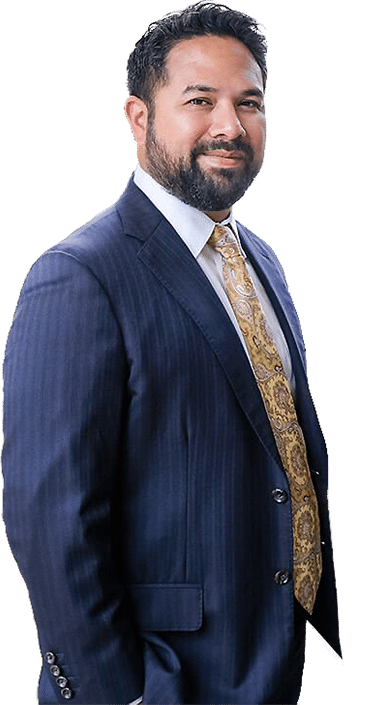
At DeHoyos Accident Attorneys, you work directly with me, Ryan DeHoyos, not a case manager or paralegal. With more than a decade of personal injury experience and Super Lawyers “Rising Star” recognition, every strategy I build is designed around your specific situation and your long-term future.
“AWESOME legal representation. Ryan is an amazing attorney to have on your side. He was very responsive to all of my phone calls and if he was busy then he would make time to talk to me about my case. Outstanding service by this lawyer who puts their clients first.
Ryan treated me like I was his only case. I would definitely recommend Ryan to anyone that is involved in a motor vehicle accident. Ryan leveled the playing field with the big insurance company. Definitely exceeded expectations on my recovery!” – David M.
How Texas Law Affects Your Motorcycle Claim
A few Texas rules will directly shape what you can recover.
Comparative fault is Texas’s rule for crashes where more than one party shares responsibility. Your compensation is reduced by your percentage of fault, and if you are found more than 50% responsible, you recover nothing. This is exactly why insurance adjusters work so hard to blame the rider.
Texas helmet law requires riders younger than 21 to wear a helmet at all times. If you are 21 or older, you can ride without one only if you have completed a motorcycle safety course or carry health insurance that covers injuries from a motorcycle crash. But if you were not wearing a helmet and suffered a head injury, the insurer will still argue you contributed to your own harm to reduce your award.
Wrongful death claims allow a spouse, children, or parents to file a civil lawsuit if a rider is killed. This claim recovers the financial and emotional losses the family has suffered, and you have two years from the date of death to file.
One pattern we consistently see in motorcycle injury claims filed out of Harris County is adjusters leaning hard on comparative fault the moment they learn the victim was riding a motorcycle, regardless of who actually caused the crash.
We have handled cases where the insurer tried to assign 40 or 50 percent fault to the rider based on nothing more than the fact that a motorcycle was involved, hoping the rider would not push back.
When these disputes cannot be resolved through negotiation, they get filed in the Harris County Civil Courthouse, where a properly documented case can overcome an adjuster’s fault argument.
What Compensation Can You Recover after a Motorcycle Crash?
A fair settlement covers every real loss you have suffered, not just your hospital bill:
- Medical expenses: Emergency care, surgery, rehabilitation, and future treatment costs
- Lost wages and earning capacity: Pay already missed and income you may not be able to earn again
- Pain and suffering: Compensation for physical pain, emotional distress, and loss of your quality of life
- Property damage: Repair or replacement of your motorcycle and riding gear
We help many clients get treatment immediately through a letter of protection, an agreement where a medical provider treats you now and is paid directly from your settlement later. You should never delay care because you cannot pay out of pocket right now.
Our firm has secured meaningful recoveries for injured Texans in a wide range of cases, including a $960,000 settlement for a motorcycle accident, car accident settlements, pedestrian collision cases, and spinal cord injury claims. These results happen when an experienced attorney fights for your full recovery instead of pushing you toward a fast, low-dollar settlement.
“Ryan DeHoyos is the MAN when it comes to legal representation for an injury in an accident. Ryan and his staff treated me like family. They kept me informed about my case and were readily available to speak to me. DeHoyos Accident Attorneys is definitely different than the rest!” – Hector M.
How We Build Your Case against the Insurance Company
Insurance companies count on riders not knowing their rights. We change that.
We work with accident reconstruction specialists who can prove exactly how the crash happened, dismantling the “I didn’t see the motorcycle” defense. We coordinate with medical experts to document the full cost of your injuries, not just today’s bills, but the care you will need for years to come. We have taken on major insurers, large trucking companies, and national corporations on behalf of everyday Texans, and we do not back down.
Life doesn’t stop after you have been injured. Neither does Ryan DeHoyos.
“I was in a car accident and hired Ryan to level the playing field. Ryan was very responsive and I actually spoke to the lawyer I hired. Ryan was very helpful, direct, and provided very useful information. I personally want to thank Ryan DeHoyos for handling my case as fast as possible. I would definitely recommend Ryan DeHoyos that is seeking a personal injury attorney!” – Thelma M.
Act Fast to Protect Your Rights
Evidence disappears, deadlines run, and insurers begin building their case the moment a crash is reported.
We work on a contingency fee basis, you pay us nothing unless we win compensation for you. Call us today for a free, no-obligation consultation.
Frequently Asked Questions about Houston Motorcycle Accidents
Is Lane Splitting Legal in Texas?
No. Lane splitting, riding between lanes of slow or stopped traffic, is illegal in Texas, and if a crash occurs while you are doing it, the insurer will use it to argue you were at fault.
Can I Recover Compensation in Texas If I Wasn’t Wearing a Helmet?
You may still recover, but the insurer will argue that not wearing a helmet contributed to your head injuries, which can reduce your award under Texas’s comparative fault rules.
How Long Do I Have to File a Motorcycle Injury Claim in Texas?
You generally have two years from the date of the crash to file a lawsuit, but claims involving government entities, such as a crash caused by a poorly maintained road, can carry much shorter deadlines.
Who Pays My Medical Bills While My Motorcycle Case Is Pending?
Your bills can be covered by your personal health insurance, MedPay coverage on your auto policy, or through a letter of protection with a provider who agrees to be paid from your eventual settlement.
How Quickly Can Surveillance Video Disappear after a Houston Crash?
Most business and traffic cameras automatically overwrite footage within 7 to 30 days, which is why we send legal preservation notices the moment we take your case.
Can I Still Recover Compensation If I Was Partly at Fault for the Crash?
Yes. Texas’s comparative fault rule allows you to recover as long as you were 50% or less responsible, but your award is reduced proportionally by your share of the fault.
Does Riding without a Motorcycle Endorsement Affect My Injury Claim?
Riding without a Class M endorsement does not automatically prevent recovery, but insurers will almost certainly use it to argue you were partially at fault, making experienced legal representation essential.




Do I need a personal injury lawyer to file a claim?
What should I do after an injury
What can I recover after a personal injury?
How should I prepare for my personal injury consultation?
Who can file a personal injury lawsuit in Texas?
How much is my personal injury case worth in Texas?
What is considered “maintenance and cure”?
$2,000,000
CAR ACCIDENT SETTLEMENT
$1,130,000
PEDESTRIAN SETTLEMENT
$1,100,000
SPINAL CORD INJURY
$955,000
PEDESTRIAN ACCIDENT
$1,300,000
CAR ACCIDENT SETTLEMENT
$980,000
CAR ACCIDENT SETTLEMENT
$960,000
MOTORCYCLE ACCIDENT
$850,000
SLIP & FALL SETTLEMENT
$250,000
LONG-TERM DISABILITY
A personal approach to personal injury in Houston, Texas









“As a client to this Law Firm, I found it to be rewarding base on their work ethics. With there expertise, knowledge, flexibility and being responsive to their client needs. They will see that their client receive the best outcome on there case. There are many people out there that have bad ideas about lawyers, but DeHoyos Accident Attorneys will make sure that you’re not stressed about anything pertaining to your case. I’ll recommend that you seek this Lawyer and Law Firm for any unraveling situation you might face.”
RIDLEY OSBOURNE
“I can’t say enough good things about DeHoyos Accident Attorneys! Mr. Ryan DeHoyos is extremely knowledgeable in his field of Personal Injury. I was injured in a motor vehicle accident last year and Mr. DeHoyos stopped at nothing to get me the compensation I deserved. He kept me updated on my case regularly and guided me to get the medical care I needed. Additionally, his staff is so kind and caring, especially Ashley… Thank you, DeHoyos Accident Attorneys for your professionalism in closing my case…and WINNING big!”
RAVEN DOLBERRY