
Texas Personal Injury ATTORNEY
The Most Dangerous Roads in Texas (I-54, I35 and more)

10+
YEARS OF PERSONAL EXPERIENCE
5-Star
RATING ON
GOOGLE REVIEWS
1,000+
CASES AND
CLIENTS
$20 M
IN SETTLEMENTS & VERDICTS
Texas roads see some of the deadliest crashes in the country, with highways like I-35 and US-59 ranking among the most dangerous in Texas. Thousands of accidents happen each year on these corridors, leaving victims with serious injuries, lost wages, and medical bills that pile up fast. Understanding which roads carry the highest risk can help you protect yourself and your family.
Every year, Texas families are shaken by crashes on the state’s most congested and hazardous highways. I-35, which cuts through Austin and San Antonio, is a constant battle zone of commercial trucks, high speeds, and heavy commuter traffic. US-59 through Houston sends thousands of vehicles through tight interchanges daily, and I-10 stretches across West Texas, where long, open stretches lead to fatigue-related crashes. When a collision happens on these roads, victims face mounting hospital costs, time away from jobs, and insurance adjusters who move quickly to minimize what they pay out.
What makes these situations even harder is that crashes on major Texas highways often involve multiple parties, including commercial trucking companies, government entities responsible for road maintenance, and insurers backed by experienced legal teams. Figuring out who is responsible, gathering evidence before it disappears, and meeting strict filing deadlines is far more complicated than most people expect when they are already dealing with physical pain and financial pressure.
In this article, you will discover which Texas roads are statistically the most dangerous, why crashes on these highways often lead to complex legal claims, and how a car accident attorney can help you pursue the full compensation you deserve.
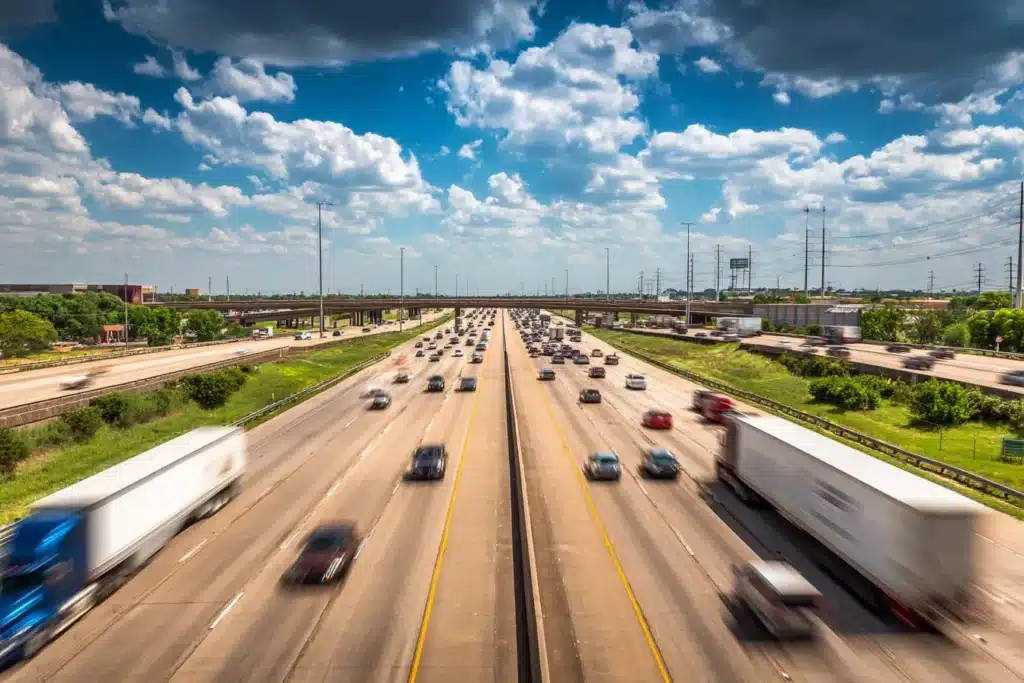
What are the Most Dangerous Roads in Texas?
Texas has more miles of road than any other state, and a handful of specific highways account for a disproportionate share of serious and fatal crashes. The combination of urban congestion, long rural stretches, and heavy freight traffic makes these corridors especially hazardous.
Here are the most dangerous roads in Texas based on crash data and fatality rates:
- I-45: Runs from Galveston through Houston to Dallas and is consistently ranked as the deadliest highway in Texas.
- I-35: A heavily traveled corridor where nearly half the state’s population lives, plagued by construction zones and commercial truck traffic.
- I-10: The 880-mile highway carries heavy urban traffic through Houston and long, high-speed rural stretches across West Texas.
- I-20: A key east-west freight route prone to multi-vehicle pileups, especially in the Dallas area.
- US-285: Known as “Death Highway” due to extreme oilfield truck volume in the Permian Basin.
- US-83: A major route through the Rio Grande Valley with two-lane sections and no median divider.
- US-54: A freight corridor through El Paso and the Texas Panhandle that sees regular fatal crashes.
Related: Texas car accident statistics
I-45: The Deadliest Highway in Texas
I-45 is the most dangerous highway in Texas and one of the deadliest in the entire country. Its most hazardous section runs through Harris County, where dense commuter and commercial traffic create a constant risk.
I-35: High Volume and Constant Construction
I-35 stretches from Laredo through San Antonio, Austin, and into the Dallas-Fort Worth area. Nearly half of all Texans live near this corridor, and ongoing construction combined with stop-and-go traffic makes it one of the most crash-prone highways in the state.
I-10: Urban Gridlock and Rural Speed
In Houston, the I-10 Katy Freeway is a major east–west corridor that carries heavy commuter and freight traffic. In West Texas, the same highway becomes long and isolated, where high speeds and driver fatigue become the primary dangers.
I-20: East Texas Freight Corridor
I-20 carries heavy long-haul freight across North and East Texas, connecting to the Dallas-Fort Worth metroplex. The rural sections through Gregg and Harrison counties are frequent sites for serious truck crashes, particularly during bad weather.
US-285: Death Highway in the Permian Basin
U.S. Route 285 earned the nickname “Death Highway” because of the extreme volume of heavy oilfield trucks using the road daily. The combination of fatigued workers, overloaded trucks, and long emergency response times in this rural area makes crashes here especially deadly.
US-83: Two-Lane Danger in the Rio Grande Valley
U.S. Route 83 serves the Rio Grande Valley, including McAllen, and includes sections that are only two lanes wide with no median. This design makes head-on collisions far more likely, and the route sees dozens of fatalities each year.
US-54: The Texas Panhandle Corridor
Many people search for “I-54 Texas,” but there is no Interstate 54 in Texas. The actual route is U.S. Route 54, which runs through El Paso and a separate segment across the Texas Panhandle through Hartley County. This rural highway has been the site of serious head-on and multi-vehicle crashes involving freight trucks.
I-30, I-635, and SH-130
Three additional highways round out the list of the most dangerous roads in Texas:
- I-30: Connects Fort Worth and Dallas through heavy commuter traffic, with sharp curves that contribute to a high accident rate.
- I-635 (LBJ Freeway): A major Dallas loop notorious for complex interchanges and a high concentration of truck-related fatalities.
- SH-130: A toll road between San Antonio and Austin with a high posted speed limit that has raised safety concerns.
Why Are These Texas Highways So Dangerous?
The danger on these roads comes from a combination of driver behavior, vehicle types, and road conditions. Most serious crashes are preventable, which means someone was negligent.
- Speed and sudden slowdowns: High speeds reduce reaction time, and when traffic stops suddenly on a busy interstate, rear-end collisions involving large trucks can be devastating.
- Fatigued driving on long routes: Long, monotonous stretches of West Texas highway cause driver fatigue, which impairs judgment as severely as alcohol.
- Oilfield truck traffic: The Permian Basin generates massive daily truck trips, and heavy vehicles cause more severe crashes and faster road deterioration.
- Weather hazards: West Texas dust storms, Gulf Coast flooding, North Texas ice, and Hill Country fog can change road conditions in minutes.
- Construction zone hazards: Texas has thousands of active work zones with narrow lanes, concrete barriers, and sudden changes in traffic patterns.
Distracted driving is another major factor on busy corridors. Using a phone, adjusting GPS, or looking away from the road for even a few seconds at highway speeds can mean traveling the length of a football field without watching traffic.
When Does Crash Risk Spike on Texas Highways?
Crash data shows that certain times of day and year carry significantly higher risk on Texas roads.
| Time Period | Highest-Risk Highway Type | Primary Risk Factor |
| Weekday Rush Hour | Urban Interstates (I-45, I-35) | Stop-and-go congestion and aggressive lane changes |
| Holiday Weekends | Long-Haul Corridors (I-10, I-20) | Increased traffic volume and impaired driving |
| Overnight Hours | Rural Routes (US-285, US-83) | Reduced visibility and slower emergency response |
Holiday weekends see a surge in both traffic volume and impaired driving. On rural highways at night, it can take emergency medical services significantly longer to reach a crash scene, increasing the likelihood that serious injuries become fatal.
Safety Tips for Driving These Texas Roads
A few practical habits can significantly reduce your risk on Texas’s most dangerous roads.
Give Trucks Extra Space
Large commercial trucks have blind spots on all four sides, known as “no-zones.” If you cannot see the truck driver’s mirrors, the driver cannot see you. Maintain a following distance of several car lengths and avoid lingering beside a truck’s trailer.
Check Conditions Before Long Trips
Before driving a long rural route, check road conditions on TxDOT’s DriveTexas website. On routes like US-285 or US-83, the nearest hospital can be an hour away, so knowing about weather or road hazards in advance matters more than it does in a city.
Merge Early in Construction Zones
Texas has thousands of active work zones. Pay attention to posted signs and merge as soon as a lane closure is indicated, rather than waiting until the last moment. Late merging is a leading cause of rear-end crashes in work zones.
What to Do After a Crash on a Texas Highway
The steps you take immediately after a crash protect both your health and your ability to recover compensation later.
Call 911 and Get Medical Care
Always call 911 so the police can create an official accident report. Get medical attention right away, even if you feel fine. Injuries like concussions and internal bleeding often have no immediate symptoms but can become serious without treatment.
Document the Scene and Gather Information
Take photos of all vehicles, their positions on the road, skid marks, and any visible injuries. For commercial trucks, write down the company name and the DOT number, which is the U.S. Department of Transportation identifier displayed on the cab. This number helps identify the trucking company and its insurance carrier.
Do Not Give a Recorded Statement
The other driver’s insurance company may call you and ask for a recorded statement. You are not required to provide one. Insurance adjusters are trained to ask questions that can reduce your claim, and anything you say can be used to minimize what they pay you.
Contact a Lawyer to Preserve Evidence
A truck’s black box, formally called an Event Data Recorder, captures speed, braking, and steering data in the seconds before a crash. An ELD, or Electronic Logging Device, records how many hours the driver was behind the wheel. Both can be legally erased by the trucking company within 30 days. An attorney can send a spoliation letter, which is a formal legal notice requiring the company to preserve all evidence related to the crash.
How DeHoyos Accident Attorneys Help After Highway Crashes
After a serious crash, you are dealing with medical appointments, missed work, and growing bills while the insurance company is already building a case to pay you as little as possible. DeHoyos Accident Attorneys handles the entire legal process so you can focus on your health and your family.
- We send spoliation letters immediately: You do not lose access to black box data, ELD logs, or dashcam footage that proves what happened.
- We handle all insurance communication: You do not get pressured into accepting a settlement that will not cover your future medical needs.
- We work with accident reconstruction experts: You get the professional analysis needed to prove exactly how the crash occurred and who was at fault.
- We advance all case costs: You do not pay anything out of pocket to build a strong case.
DeHoyos Accident Attorneys operates on an anti-volume model, meaning we don’t take on large numbers of cases just to settle them quickly; instead, every client receives the detailed attention their case deserves. You get direct access to attorney Ryan DeHoyos, a recognized Super Lawyers Rising Star, not a rotating team of case managers.
We represent clients injured across Houston and the surrounding Texas areas, including those hurt on I-45, I-10, I-35, and the other dangerous corridors covered in this guide. Contact us today for a free consultation. You pay nothing unless we win.
Texas Dangerous Roads FAQs
What Is the Deadliest Highway in Texas?
I-45 is consistently ranked as the deadliest highway in Texas, with its most dangerous segment running through Harris County in Houston.
Is There an I-54 in Texas?
There is no Interstate 54 in Texas. The route people are searching for is U.S. Route 54, which runs through El Paso and a separate stretch across the Texas Panhandle.
What Is “Death Highway” in Texas?
“Death Highway” refers to U.S. Route 285 in the Permian Basin, named for its high rate of fatal accidents driven by heavy oilfield truck traffic and long emergency response times.
How Long Do I Have to File a Claim After a Texas Highway Crash?
Texas gives you two years from the date of the accident to file a personal injury lawsuit, but if a government vehicle was involved, the notice deadlines are much shorter and require immediate action.
Can I Recover Compensation if I Was Partly at Fault?
Yes, Texas uses a modified comparative fault rule, which means you can still recover damages as long as you are found to be 50 percent or less at fault, though your compensation is reduced by your percentage of responsibility.





Do I need a personal injury lawyer to file a claim?
What should I do after an injury
What can I recover after a personal injury?
How should I prepare for my personal injury consultation?
Who can file a personal injury lawsuit in Texas?
How much is my personal injury case worth in Texas?
What is considered “maintenance and cure”?
$2,000,000
CAR ACCIDENT SETTLEMENT
$1,130,000
PEDESTRIAN SETTLEMENT
$1,100,000
SPINAL CORD INJURY
$955,000
PEDESTRIAN ACCIDENT
$1,300,000
CAR ACCIDENT SETTLEMENT
$980,000
CAR ACCIDENT SETTLEMENT
$960,000
MOTORCYCLE ACCIDENT
$850,000
SLIP & FALL SETTLEMENT
$250,000
LONG-TERM DISABILITY
A personal approach to personal injury in Houston, Texas









“As a client to this Law Firm, I found it to be rewarding base on their work ethics. With there expertise, knowledge, flexibility and being responsive to their client needs. They will see that their client receive the best outcome on there case. There are many people out there that have bad ideas about lawyers, but DeHoyos Accident Attorneys will make sure that you’re not stressed about anything pertaining to your case. I’ll recommend that you seek this Lawyer and Law Firm for any unraveling situation you might face.”
RIDLEY OSBOURNE
“I can’t say enough good things about DeHoyos Accident Attorneys! Mr. Ryan DeHoyos is extremely knowledgeable in his field of Personal Injury. I was injured in a motor vehicle accident last year and Mr. DeHoyos stopped at nothing to get me the compensation I deserved. He kept me updated on my case regularly and guided me to get the medical care I needed. Additionally, his staff is so kind and caring, especially Ashley… Thank you, DeHoyos Accident Attorneys for your professionalism in closing my case…and WINNING big!”
RAVEN DOLBERRY