
Texas Personal Injury ATTORNEY
The Most Common Car Accident Leg Injuries in Texas

10+
YEARS OF PERSONAL EXPERIENCE
5-Star
RATING ON
GOOGLE REVIEWS
1,000+
CASES AND
CLIENTS
$20 M
IN SETTLEMENTS & VERDICTS
The most common car accident leg injuries in Texas include fractures, sprains, and ligament tears that can keep you out of work for weeks. These injuries frequently affect the knee, hip, tibia, and femur. Recovery often requires surgery, physical therapy, and extended time away from work. Injury severity directly affects how much compensation you may be entitled to pursue.
After a serious crash on roads like I-45, Highway 59, or Loop 610, leg injuries can leave you unable to drive, work, or care for your family. A fractured femur or torn ACL is not just painful; it means surgeries, follow-up appointments, rehabilitation sessions, and months of lost income. Many Houston families find themselves falling behind on bills before they even understand what their injury is worth.
The challenge is that insurance companies routinely argue that leg injuries are less serious than internal or head trauma, using that position to push lower settlement offers. They may claim your injury was pre-existing, that treatment was excessive, or that you could have returned to work sooner. Without proper medical documentation and legal support, it is easy to accept a settlement that does not cover the full cost of your recovery.
In this article, you will discover the most common leg injuries caused by car accidents in Texas, how they affect your ability to work and recover, and how a car accident attorney can help you pursue the full compensation your injuries deserve.
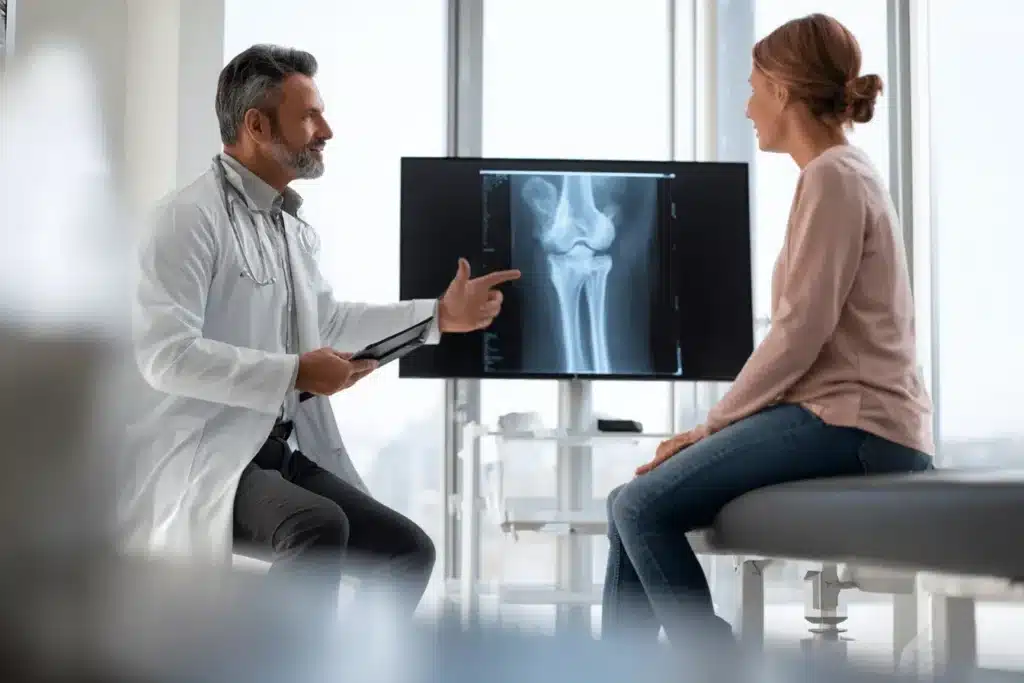
What are the Most Common Car Accident Leg Injuries in Texas?
The most common car accident leg injuries in Texas are fractures, ligament and meniscus tears, sprains, and soft tissue damage. Your legs sit in a cramped footwell and often brace hard against the brake pedal just before a collision, which is why they absorb so much of the impact force.
The four main categories of leg injuries from car accidents are:
- Broken bones and fractures: The femur, tibia, fibula, patella, and ankle bones are all vulnerable to breaking on impact.
- Knee ligament and meniscus tears: The connective tissue inside your knee can stretch or tear completely during a crash.
- Sprains and strains: Ligaments, muscles, and tendons can be overstretched or partially torn without a bone breaking.
- Soft tissue damage: Deep bruising and internal swelling can hide more serious injuries underneath.
Fractures and Broken Legs From Car Accidents
A fracture is a broken bone. A simple fracture means the bone breaks but stays inside the skin, while an open fracture means the bone pierces through the skin and requires emergency surgery. Surgeons often install metal plates, rods, and screws to hold the bones in position while they heal.
Knee Ligament and Meniscus Tears
Ligaments are thick bands of tissue that connect bone to bone. The meniscus is a rubbery cartilage pad that cushions the inside of your knee joint. Your knee has four main ligaments:
- ACL (Anterior Cruciate Ligament): Controls forward stability of the knee.
- PCL (Posterior Cruciate Ligament): Controls backward stability.
- MCL and LCL (Medial and Lateral Collateral Ligaments): Stabilize the inner and outer sides of the knee.
A “dashboard knee” happens when your bent knee smashes into the hard plastic dashboard during a crash, tearing one or more of these structures. These tears rarely appear on a standard X-ray and usually require an MRI to confirm.
Sprains, Strains, and Soft Tissue Damage
A sprain is a stretched or torn ligament. A strain is a stretched or torn muscle or tendon. Doctors grade these injuries in three levels:
- Grade 1: Mild stretching and soreness that heals in a few weeks with rest.
- Grade 2: A partial tear causing swelling and instability that requires bracing and physical therapy.
- Grade 3: A complete tear that may require surgery to repair.
Severe leg bruising after a car accident can sometimes mask a much more serious underlying injury, so never assume bruising alone means nothing is broken.
When Should You See a Doctor for Leg Pain After a Crash?
The adrenaline surge during a crash can mask serious physical damage for hours or even days. You might walk away from the scene feeling fine and wake up the next morning unable to put weight on your foot.
Go to the emergency room immediately if you experience any of these symptoms:
- Cannot bear weight: You cannot stand or walk even a few steps without severe pain.
- Visible deformity: Your leg looks bent, twisted, or shorter on one side.
- Tight, shiny skin: Extreme swelling that makes your skin look stretched can signal compartment syndrome, a dangerous pressure buildup inside the muscle.
- Numbness or tingling: Loss of feeling often points to nerve damage.
- Calf warmth and one-sided swelling: These can be signs of a deep vein thrombosis, which is a blood clot that forms in the leg after trauma.
Gaps in your medical treatment give insurance adjusters a reason to argue the crash did not cause your injury. Seeing a doctor the same day protects both your health and your legal claim.
How Do Doctors Diagnose a Leg Injury After a Car Accident?
Getting the right imaging protects your health and gives you the hard proof needed to support your claim. Doctors use three main tools to look inside your leg:
| Test | What It Shows | When Doctors Use It |
| X-ray | Broken bones and dislocations | First test ordered after most leg trauma |
| MRI | Ligament tears, meniscus damage, soft tissue | Knee pain or swelling without a clear fracture |
| CT Scan | Complex fractures and joint surface detail | Surgical planning for serious breaks |
Texas insurance carriers almost always require a confirmed MRI report before they will pay fair value on a soft tissue knee claim.
What Does Treatment for a Car Accident Leg Injury Look Like?
Your treatment depends entirely on which structures were injured and how severely. You are not facing a vague process but specific realities like weeks on crutches, missed paychecks, and the cost of a custom knee brace.
For sprains and minor tears, doctors typically recommend rest, ice, compression, and elevation alongside anti-inflammatory medication. You may also need a walking boot or knee immobilizer and four to eight weeks of physical therapy.
For fractures and complete ligament tears, surgery is often necessary. Common procedures include:
- ORIF (Open Reduction Internal Fixation): A surgeon opens the leg and uses metal hardware to hold broken bones in place.
- ACL Reconstruction: A surgeon replaces the torn ligament using tissue from another part of your body or a donor.
- Meniscus Repair: A surgeon stitches the torn cartilage back together or removes the damaged portion.
These surgeries require a minimum of three to six months of recovery, and some patients need a second surgery later to remove painful hardware.
Physical therapy after a serious leg injury is not optional. Skipping sessions slows your physical recovery and weakens your legal claim because insurers argue you failed to mitigate your own damages.
Desk workers may return to the office in a few weeks, but warehouse workers, construction workers, and delivery drivers often miss several months and need light duty restrictions documented in writing by their doctor.
What Long-Term Problems Can Follow a Leg Injury?
Some of the most serious and expensive effects of a leg injury do not appear until months or years after the crash. You must account for these future complications before you accept any settlement offer because once you sign a release, you cannot reopen your claim.
- Post-traumatic arthritis: Joint stiffness and daily pain that develops long after the original injury heals.
- Chronic instability: A knee or ankle that gives out unexpectedly during normal activity like walking or climbing stairs.
- Hardware pain: Ongoing soreness and cold sensitivity around the metal plates and screws inside your leg.
- Complex Regional Pain Syndrome (CRPS): Severe, lasting nerve pain that can spread beyond the original injury site and significantly affect your daily function.
One pattern we consistently see in leg injury claims handled through the Harris County District Court is that insurance adjusters use the post-traumatic arthritis argument to dispute future medical costs months after settlement.
We address this by working with orthopedic surgeons at facilities like Memorial Hermann and Houston Methodist to obtain a written prognosis that specifically addresses future joint degeneration before we draft the initial demand.
That prognosis document turns a speculative future cost into a documented anticipated expense, which is far harder for an adjuster to dismiss.
Who Pays for a Car Accident Leg Injury in Texas?
Texas is a fault state. This means the driver who caused the crash is financially responsible for your injuries, and their liability insurance policy is your primary source of recovery. You may also have access to additional coverage layers:
- Personal Injury Protection (PIP): Pays your initial medical bills and a portion of lost wages regardless of who caused the crash.
- MedPay: Similar to PIP but limited strictly to medical costs.
- Uninsured or Underinsured Motorist Coverage: Steps in when the at-fault driver has no insurance or a policy too small to cover your bills.
Texas hospitals can also attach a lien to your settlement, meaning they have a legal right to be paid from your recovery. We negotiate these hospital bills down so more money stays with you.
What we see across leg injury claims we handle in Harris County is that clients who undergo ACL reconstruction or tibia plating at HCA Houston Healthcare often face a second procedure six to twelve months later to remove hardware that causes chronic pain.
Adjusters who settle early, before that second surgery is recommended, leave clients without money to pay for a procedure their own surgeon predicted.
We never recommend settling a leg injury case until your orthopedic surgeon has confirmed whether hardware removal is likely, because that single procedure can add tens of thousands of dollars to your medical costs.
What Damages Can You Recover for a Leg Injury?
You may be entitled to compensation for:
- Medical bills: Past emergency treatment, future surgeries, and ongoing physical therapy.
- Lost income: Missed paychecks and reduced earning capacity if you cannot return to your previous job.
- Pain and suffering: Daily physical pain and the loss of activities you used to enjoy.
- Scarring and disability: Permanent visible surgical scars and lasting physical limitations.
- Property damage: The cost to repair or replace your vehicle.
Cases that require surgery or result in permanent limitations typically settle for substantially more than claims involving only soft tissue damage.
“DeHoyos Accident Attorneys is a trustworthy and efficient law firm. Ryan DeHoyos was a very amiable and easy to work with attorney. He made the process very easy and kept me informed throughout the whole process. I would highly recommend his services to anyone with a personal injury case.” – Jose A.
How Does Texas Fault Law Affect Your Leg Injury Claim?
Texas follows a modified comparative fault rule. This means you can recover damages as long as you are 50 percent or less at fault for the crash, and your recovery is reduced by your share of the blame. If your total damages equal $100,000 and you are found 20 percent at fault, you recover $80,000.
Insurance adjusters routinely try to shift blame onto the injured driver to reduce their payout. You generally have two years from the date of the crash to file a personal injury claim in Texas, but crashes involving city or county vehicles may require written notice in as little as 90 days.
What Should You Do After a Car Accident Leg Injury in Houston?
The steps you take in the first few days protect both your health and your legal claim. We recommend a clear sequence of actions.
Get medical care the same day. Same-day documentation creates a direct medical link between the crash and your injury, even if your pain initially seems minor.
Document the crash scene and your injuries. Take photos of the vehicle positions, the smashed footwell inside your car, visible bruising, and any assistive devices like crutches or a wheelchair.
Decline recorded statements to the insurance company. Adjusters are trained to use casual statements to argue your injury is not serious or was not caused by the crash.
Call a Houston car accident lawyer immediately. Surveillance video from gas stations and businesses near I-45, I-10, and the Beltway is often permanently overwritten within a few days. Early action lets your legal team secure that footage before it is gone.
In our experience handling leg injury cases involving crashes at Houston intersections along I-45, I-10, and the Beltway 8, business surveillance footage from nearby gas stations and fast food restaurants near the crash site is often the best available proof of impact severity.
Emergency rooms like Ben Taub and Memorial Hermann Trauma frequently document impact mechanism in their initial notes, and those notes combined with surveillance footage showing the speed and angle of the crash make it far harder for an adjuster to argue your femur fracture resulted from a minor impact.
How Can DeHoyos Accident Attorneys Help With Your Leg Injury Claim?
We know your biggest fear is being treated like a file number by a high-volume firm that pushes you toward a quick, low settlement. DeHoyos Accident Attorneys takes fewer cases so we can build a strategy around your specific injury, your job, and your family’s financial needs.
Ryan DeHoyos is an experienced attorney. Our firm has positive client reviews, and we have secured favorable settlements and verdicts for our clients. We handle the calls from insurance adjusters so you can focus on your physical therapy. You pay nothing unless we win your case.
“Ryan and his team were wonderful and inviting. They made me feel like I was their only client. Highly responsive to all inquiries and provided assistance in resolving any issues that were injury related.” – Veronica S.
Call DeHoyos Accident Attorneys today for a free consultation about your car accident leg injury.
Common Car Accident Leg Injury FAQs
What Is the Average Settlement for a Broken Leg in Texas?
There is no fixed average because the final amount depends on whether you need surgery, how much work you miss, and whether you suffer permanent limitations. Cases involving open fractures or surgically installed hardware typically settle for significantly more than simple breaks.
Do You Need an MRI to Prove a Knee Ligament Tear in Texas?
Yes, because standard X-rays do not show ligament or meniscus damage. Texas insurance carriers almost always require a confirmed MRI report before paying fair value on a soft tissue knee claim.
What if You Had a Prior Knee or Ankle Problem Before the Crash?
Texas law allows you to recover compensation for the aggravation of a pre-existing condition. A prior medical issue does not block your claim as long as the crash made your condition measurably worse.
What if You Cannot Afford the MRI or Surgery Your Doctor Recommended?
We connect you with trusted medical providers who treat car accident patients on a letter of protection. This means the doctors wait to be paid from your final settlement instead of billing you upfront.
How Long Do You Have to File a Car Accident Leg Injury Claim in Texas?
Most personal injury claims in Texas must be filed within two years of the crash. Claims involving a government vehicle may require formal written notice in as little as 90 days.
Contact DeHoyos Accident Attorneys Today
When a negligent driver leaves you with a serious leg injury and mounting medical bills, you need a firm that will fight for every dollar you are owed. Contact DeHoyos Accident Attorneys today by phone or through our online contact form to schedule your free consultation.
We shoulder the legal fight so you can focus on getting your leg, your income, and your daily routine back. You pay zero legal fees unless we win your case.
“Very professional, authentic, honest, reliable and always kept in touch with me about my case. Ryan is bringing trust back to personal injury attorneys. I highly recommend him if you are injured in an accident.” – Angie C.





Do I need a personal injury lawyer to file a claim?
What should I do after an injury
What can I recover after a personal injury?
How should I prepare for my personal injury consultation?
Who can file a personal injury lawsuit in Texas?
How much is my personal injury case worth in Texas?
What is considered “maintenance and cure”?
$2,000,000
CAR ACCIDENT SETTLEMENT
$1,130,000
PEDESTRIAN SETTLEMENT
$1,100,000
SPINAL CORD INJURY
$955,000
PEDESTRIAN ACCIDENT
$1,300,000
CAR ACCIDENT SETTLEMENT
$980,000
CAR ACCIDENT SETTLEMENT
$960,000
MOTORCYCLE ACCIDENT
$850,000
SLIP & FALL SETTLEMENT
$250,000
LONG-TERM DISABILITY
A personal approach to personal injury in Houston, Texas









“As a client to this Law Firm, I found it to be rewarding base on their work ethics. With there expertise, knowledge, flexibility and being responsive to their client needs. They will see that their client receive the best outcome on there case. There are many people out there that have bad ideas about lawyers, but DeHoyos Accident Attorneys will make sure that you’re not stressed about anything pertaining to your case. I’ll recommend that you seek this Lawyer and Law Firm for any unraveling situation you might face.”
RIDLEY OSBOURNE
“I can’t say enough good things about DeHoyos Accident Attorneys! Mr. Ryan DeHoyos is extremely knowledgeable in his field of Personal Injury. I was injured in a motor vehicle accident last year and Mr. DeHoyos stopped at nothing to get me the compensation I deserved. He kept me updated on my case regularly and guided me to get the medical care I needed. Additionally, his staff is so kind and caring, especially Ashley… Thank you, DeHoyos Accident Attorneys for your professionalism in closing my case…and WINNING big!”
RAVEN DOLBERRY