
Texas Personal Injury ATTORNEY
Personal Injury Liability in Texas: Fault, Negligence & More

10+
YEARS OF PERSONAL EXPERIENCE
5-Star
RATING ON
GOOGLE REVIEWS
1,000+
CASES AND
CLIENTS
$20 M
IN SETTLEMENTS & VERDICTS
In Texas, personal injury liability is determined by proving another party’s carelessness caused your injury and measurable losses. Texas uses a modified comparative fault system, meaning your compensation is reduced by your percentage of fault. If you are found 51% or more responsible, you cannot recover anything under Texas law.
When you are dealing with medical bills, missed work, and insurance adjusters calling your phone, understanding how fault and negligence actually work can mean the difference between a fair settlement and walking away with nothing. Texas has specific rules that govern who pays, how much they owe, and what happens when more than one party shares the blame, and insurers know those rules better than most injury victims do.
The challenge is that the at-fault party’s insurer is not on your side. Their adjusters are trained to build a case for reducing your settlement from the moment you file your claim. They look for recorded statements, social media posts, and gaps in your medical treatment. They may argue you contributed to the accident, even when the evidence says otherwise. Every percentage point of fault they can assign to you costs you money.
In this article, you will discover the four elements of negligence you must prove, how Texas comparative fault rules affect your compensation, what evidence supports a strong liability case, and how a Houston personal injury attorney can protect your claim at every stage.

What Are the Four Elements of Negligence in Texas?
To win compensation in a Texas personal injury case, you must prove four specific things. If even one element is missing, your claim may be denied entirely.
- Duty of care: The other party had a legal obligation to act safely toward you. Every driver on the road, for example, has a duty to follow traffic laws and pay attention.
- Breach of duty: They failed to meet that obligation. A driver texting behind the wheel or a property owner who ignores a known hazard has breached their duty.
- Causation: Their failure directly caused your injury. You must show the harm was a foreseeable result of their actions, not a coincidence.
- Damages: You suffered real, measurable losses. This includes medical expenses, lost wages, and physical or emotional suffering.
Proving all four elements is not always straightforward. At DeHoyos Accident Attorneys, we investigate every detail of your case to make sure nothing is missed before we build your claim.
How Does Comparative Negligence in Texas Work?
Comparative negligence is the legal rule Texas uses to divide fault when more than one person contributes to an accident. This means a jury or insurance adjuster will assign a percentage of blame to each party involved.
Insurance companies use this rule aggressively. If they can convince a jury that you were even partially responsible, they pay you less. For example, they might argue you were following too closely when another driver ran a stop sign and hit you.
The percentage of fault assigned to you matters more than most people realize, because of a specific Texas law called the 51% Bar Rule.
What Is the 51% Bar Rule in Texas?
The 51% Bar Rule is a hard cutoff under Texas negligence law. If you are found 51% or more at fault for an accident, you recover nothing, even if your injuries are severe and your bills are mounting.
If your share of fault is 50% or less, you can still recover compensation, but your total award is reduced by your percentage of blame.
| Your Percentage of Fault | Your Compensation From a $100,000 Award |
| 0% | $100,000 |
| 20% | $80,000 |
| 50% | $50,000 |
| 51% | $0 |
One percentage point can cost you every dollar you are owed. This is why insurance companies work so hard to shift blame onto you, and why we fight back with documented evidence to protect your recovery.
What Happens When Multiple Parties Share Fault?
Texas law allows fault to be divided among several responsible parties, not just one. This legal concept is called proportionate responsibility.
In a commercial truck crash, for instance, the driver may be at fault for speeding, the trucking company for skipping required maintenance, and a parts manufacturer for a defective brake system. Each party carries a share of the liability.
Identifying every responsible party is critical because it opens additional insurance policies and increases the total compensation available to you. We investigate all potential sources of liability so you are not left with a fraction of what you actually need.
What Evidence Proves Fault in a Texas Injury Case?
Insurance companies do not take your word for it. Hard evidence is what moves a claim forward and pushes an insurer toward fair compensation.
We gather and preserve every piece of relevant documentation, including:
- Police and accident reports
- Photos and video from the scene, including dashcam and security footage
- Witness names and statements
- Medical records that directly link your injuries to the incident
- Cell phone records showing distracted driving
- Black box data from vehicles involved in the crash
- Maintenance logs and inspection records for commercial vehicles
Timing is critical because this evidence disappears fast. Security footage is often overwritten within days. Trucking companies may erase electronic logs if not legally required to preserve them. We send legal notices called spoliation letters the moment we take your case to stop that from happening.
When Do You Need Expert Witnesses?
Some cases require outside experts to explain what happened and why. An accident reconstructionist can recreate the crash to prove how it occurred. A medical expert can explain the long-term physical effects of your injuries and the cost of future care. We bring in the right experts so that liability is not left open to the insurance company’s interpretation.
In one case we handled involving a commercial vehicle crash on the Katy Freeway, the insurance company denied liability entirely, claiming our client had merged into the truck’s blind spot. We retained an accident reconstructionist who analyzed the final vehicle positions, skid marks, and black box data from the truck. His report showed the truck was traveling approximately 12 miles per hour over the posted speed limit at the time of impact, a finding that fundamentally changed the fault analysis and the insurer’s settlement posture.
How Does Strict Liability Differ From Negligence?
Most personal injury cases are built on negligence, meaning you have to prove the other party was careless. Strict liability is different. It holds a person or company responsible for harm regardless of how careful they were.
- Negligence: You must prove the other party failed to use reasonable care. This applies to most car accidents, slip and fall cases, and medical errors.
- Strict liability: You only need to prove that a product was defective or an activity was inherently dangerous, and that it caused your injury. Common examples include defective car parts and dog bite cases.
No matter which legal theory applies to your case, you still need to prove what your injuries have actually cost you.
What Damages Can You Recover in a Texas Personal Injury Claim?
Texas law allows you to pursue compensation across several categories of losses. You may be entitled to recover:
- Medical expenses: Emergency care, surgeries, rehabilitation, prescription costs, and future treatment you will need because of the injury
- Lost income: Paychecks you missed while unable to work and any reduction in your ability to earn in the future
- Pain and suffering: Compensation for the physical pain and emotional distress caused by your injuries
- Property damage: The cost to repair or replace your vehicle or any other personal property damaged in the incident
- Punitive damages: Additional compensation awarded when the at-fault party acted with extreme recklessness, such as driving drunk or knowingly violating safety laws
One more thing worth knowing: hospitals and health insurers can place liens on your settlement, meaning they take a portion before you see a dollar. We negotiate to reduce those liens wherever possible so more of your compensation stays with you.
How Long Do You Have to File a Personal Injury Claim in Texas?
Texas gives most injury victims two years from the date of the accident to file a lawsuit. This deadline is called the statute of limitations. Miss it, and the court will almost certainly refuse to hear your case, leaving you with no legal path to compensation.
There are two important exceptions to know:
- Government entity claims: If your injury was caused by a city, county, or state agency, you must file a formal notice within six months of the incident under the Texas Tort Claims Act.
- Injuries involving minors: The two-year clock may not begin until the child turns 18, depending on the circumstances.
Even if your deadline is still months away, waiting hurts your case. Witnesses forget details, video footage gets deleted, and electronic data is overwritten. Acting quickly gives us the best chance to preserve what proves your claim.
How Insurance Companies Shift Blame and How We Push Back
Insurance adjusters are trained to protect their company’s bottom line. The faster they can close your claim and the less they pay you, the better it is for them. They use specific tactics to make that happen.
- Recorded statements: An adjuster will call you soon after the accident and ask for a recorded statement. Their questions are designed to get you to say something that assigns blame to you or downplays your injuries. We handle all communications with insurance companies so you do not accidentally damage your own claim.
- Social media monitoring: Investigators will review your social media profiles for photos or posts they can use to argue your injuries are not as serious as you say. We advise you on what to avoid sharing while your case is open.
- Lowball settlement offers: A quick check arrives before the full extent of your injuries is known. That first offer rarely accounts for future surgeries, ongoing therapy, or lost earning capacity. We calculate the complete, long-term cost of your injuries before any settlement is considered.
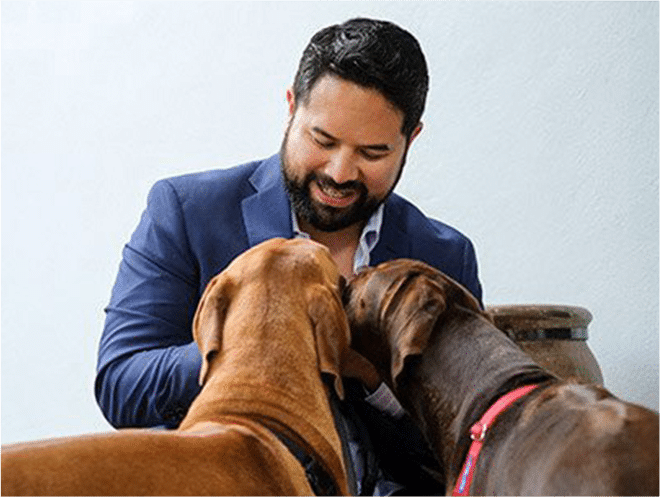
Ryan DeHoyos spent a decade in the corporate world before becoming an attorney, and that background gives our firm a clear-eyed understanding of how large companies and insurers operate. We use that knowledge to anticipate their playbook and build cases designed to overcome it.
One mistake we see injured Texans make is giving a recorded statement within the first 48 hours of an accident, often because an adjuster called sounding helpful and sympathetic. In a slip and fall case we handled at a retail location in southwest Houston, the client told the adjuster she was not sure whether she had noticed the wet floor before falling. That phrase was used to assign her 30% comparative fault during mediation. We pushed back with store surveillance footage, but the early statement complicated negotiations that should have been straightforward.
Talk to a Houston Personal Injury Lawyer Today
Sorting through fault, negligence, and insurance tactics while you are dealing with pain and financial pressure is a lot to manage alone. At DeHoyos Accident Attorneys, we shoulder the legal burden so you can focus on getting back to work and back to your family.
We represent injured clients in Houston and the surrounding Texas areas. We work on a contingency fee basis, which means you pay nothing unless we win your case. Contact us today for a free consultation and get clear answers about your rights and your options.
Texas Personal Injury Liability FAQ
Can I Still Recover Compensation if I Was Partly at Fault for My Accident?
Yes, as long as your share of fault is 50% or less, Texas law still allows you to recover compensation. Your final award will be reduced by your percentage of fault.
Does Not Wearing a Seat Belt Affect My Personal Injury Claim in Texas?
Not wearing a seat belt does not automatically bar you from recovering damages, but the insurance company may use it to argue your injuries were worsened by your own actions, which can increase your assigned percentage of fault.
What Can I Do if the At-Fault Driver Has No Insurance?
You may be able to file a claim through your own Uninsured or Underinsured Motorist coverage, often called UM or UIM coverage. We review every available policy to find all possible sources of compensation for you.
What Is Negligence Per Se Under Texas Law?
Negligence per se is a rule that treats a violation of a safety law as automatic proof of a breach of duty. If a driver ran a red light and hit you, that traffic violation can be used directly as evidence of negligence without needing to prove additional carelessness.
How Quickly Can Critical Accident Evidence Disappear?
Surveillance and dashcam footage is often overwritten within days, and trucking companies may erase electronic logs quickly if not legally required to preserve them. We send preservation notices immediately after you hire us to stop that from happening.




Do I need a personal injury lawyer to file a claim?
What should I do after an injury
What can I recover after a personal injury?
How should I prepare for my personal injury consultation?
Who can file a personal injury lawsuit in Texas?
How much is my personal injury case worth in Texas?
What is considered “maintenance and cure”?
$2,000,000
CAR ACCIDENT SETTLEMENT
$1,130,000
PEDESTRIAN SETTLEMENT
$1,100,000
SPINAL CORD INJURY
$955,000
PEDESTRIAN ACCIDENT
$1,300,000
CAR ACCIDENT SETTLEMENT
$980,000
CAR ACCIDENT SETTLEMENT
$960,000
MOTORCYCLE ACCIDENT
$850,000
SLIP & FALL SETTLEMENT
$250,000
LONG-TERM DISABILITY
A personal approach to personal injury in Houston, Texas









“As a client to this Law Firm, I found it to be rewarding base on their work ethics. With there expertise, knowledge, flexibility and being responsive to their client needs. They will see that their client receive the best outcome on there case. There are many people out there that have bad ideas about lawyers, but DeHoyos Accident Attorneys will make sure that you’re not stressed about anything pertaining to your case. I’ll recommend that you seek this Lawyer and Law Firm for any unraveling situation you might face.”
RIDLEY OSBOURNE
“I can’t say enough good things about DeHoyos Accident Attorneys! Mr. Ryan DeHoyos is extremely knowledgeable in his field of Personal Injury. I was injured in a motor vehicle accident last year and Mr. DeHoyos stopped at nothing to get me the compensation I deserved. He kept me updated on my case regularly and guided me to get the medical care I needed. Additionally, his staff is so kind and caring, especially Ashley… Thank you, DeHoyos Accident Attorneys for your professionalism in closing my case…and WINNING big!”
RAVEN DOLBERRY