
League City Personal Injury ATTORNEY
The Most Dangerous Roads in League City, TX

10+
YEARS OF PERSONAL EXPERIENCE
5-Star
RATING ON
GOOGLE REVIEWS
1,000+
CASES AND
CLIENTS
$20 M
IN SETTLEMENTS & VERDICTS
The most dangerous roads in League City include I-45 (the Gulf Freeway), FM 518, FM 646, State Highway 96, and State Highway 3. These corridors produce the most serious crashes in the city each year, driven by fast-moving commuters, heavy trucks, and rapid population growth. Because League City sits between Houston and Galveston, these roads carry a constant mix of commuters, beach traffic, and Gulf Coast freight.
If you drive I-45, FM 518, or FM 646 on a regular day in League City, you already know how fast a routine trip can turn into a crash. Serious collisions on these roads leave people with hospital bills, missed paychecks, and totaled vehicles, often within seconds of a green light or a merge lane. The intersections where these roads cross, from I-45 and FM 518 to SH 96 and South Shore Boulevard, generate a steady stream of crash reports every year.
Knowing which roads are dangerous does not make it any easier to get a fair settlement after you are hurt on one of them. Insurance adjusters often try to shift blame onto the injured driver, especially at high-crash intersections where fault can look complicated on paper. If a poorly designed merge lane, a missing sign, or a government road defect contributed to your crash, proving it adds another layer most drivers do not expect to deal with while they are trying to recover.
This article breaks down exactly which League City roads and intersections cause the most crashes, why they are so dangerous, and what to do if you are hurt on one. In this article, you will discover the most dangerous roads and intersections in League City, the conditions that make each one hazardous, and how a League City car accident attorney can help you pursue full compensation.
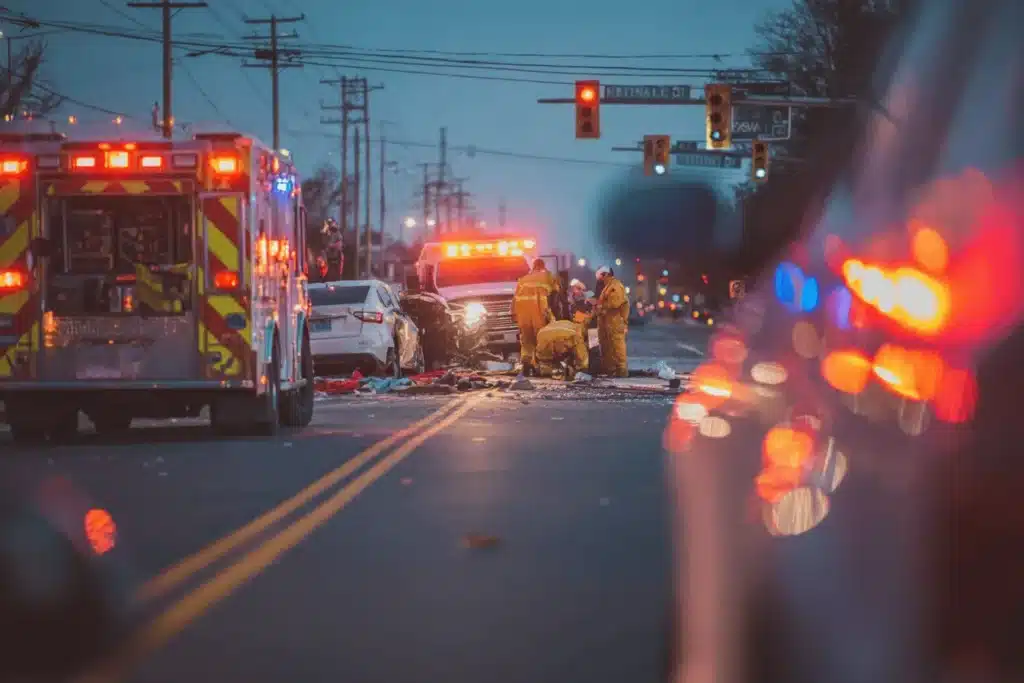
Where Are the Most Dangerous Roads in League City?
The most dangerous roads in League City are I-45 (the Gulf Freeway), FM 518, FM 646, and State Highway 96, and if you live or work here, you likely drive at least one of them every day. League City sits between Houston and Galveston, so our roads absorb commuter traffic, beach traffic, and heavy commercial trucks all at once.
I-45 Gulf Freeway through League City
I-45 is the primary highway connecting Houston to Galveston, and it cuts directly through League City. Freeway speeds, constant lane changes, and a steady flow of 18-wheelers combine to make this one of the most dangerous stretches of highway in the country.
FM 518 Main Street Corridor
FM 518, commonly called Main Street, is League City’s main east-west road, running from I-45 all the way to Kemah. Schools, shopping centers, and neighborhoods pour directly onto it, creating a constant stream of turning traffic and frequent rear-end and T-bone collisions.
FM 646
FM 646 connects League City to Dickinson and Santa Fe, and rapid residential growth has dramatically increased the number of vehicles using it. The road was not designed to carry this volume, and the result is daily congestion and avoidable crashes.
State Highway 96 (League City Parkway)
SH 96 is a fast-moving east-west corridor interrupted by multiple traffic signals. Drivers frequently travel at high speeds between lights and cannot stop in time when traffic backs up, a pattern that produces serious rear-end crashes regularly.
FM 270 Egret Bay Boulevard
FM 270 links League City to the Clear Lake area and carries thousands of NASA-area workers and business commuters every day. Rush-hour backups on this road create consistent conditions for rear-end collisions.
State Highway 3
SH 3 runs parallel to the Gulf Freeway and is often used as a shortcut when I-45 is congested. Its narrow lanes, older design, and constant business access points make it a serious risk for sideswipes and head-on crashes.
NASA Road 1 and NASA Bypass
Crash activity near these roads is closely tied to shift changes at Johnson Space Center and the large employers surrounding it. When thousands of workers leave at the same time, traffic surges and accidents spike predictably.
What League City Intersections Have the Most Crashes?
Intersections force drivers from different directions to share the same space at the same time, and that is where a large share of serious accidents happen. In our experience representing injured people across League City, these are the locations that appear most often in crash reports:
- I-45 and FM 518
- I-45 and FM 646
- FM 518 and FM 270 (Egret Bay Boulevard)
- SH 96 and FM 270
- SH 3 and FM 518
- SH 96 and South Shore Boulevard
- FM 646 and South Shore Boulevard
One missed red light or one misjudged left turn is all it takes at any of these locations.
One pattern we consistently see in League City intersection claims is how quickly adjusters try to split fault between drivers at locations like I-45 and FM 518 or FM 646 and South Shore Boulevard, even when the crash report points clearly to one driver.
In our experience handling these cases across Galveston County, insurers often lean on ambiguous witness statements from busy intersections to argue their driver was only partly responsible.
What we see repeatedly at the SH 96 and FM 270 intersection in particular is late braking from drivers unfamiliar with how quickly that signal cycle changes. Getting the crash report, any nearby camera footage, and witness contact information locked down early makes a real difference in how these disputes get resolved.
“I was involved in a car accident and Ryan DeHoyos helped me in my case. He was easy to reach and answered all my questions and concerns. I would definitely recommend him again.” -Rossy T.
Why Are These Roads So Dangerous?
The danger on League City roads is not random, there are specific, recurring reasons why these corridors produce so many serious crashes. Those reasons also often determine who is legally responsible for your injuries.
- Rapid population growth: League City has expanded quickly, but the road infrastructure has not kept pace with the surge in drivers and daily vehicle volume.
- Speed differentials: The most dangerous scenario on any road is when fast-moving traffic suddenly meets slow or stopped vehicles, which happens daily on I-45 ramps and at major intersections throughout the city.
- Commercial truck traffic: I-45 and SH 3 carry heavy volumes of 18-wheelers hauling goods along the Gulf Coast corridor, and a crash with a fully loaded commercial truck is rarely minor.
- Gulf Coast weather: Heavy rain, dense fog, and hurricane flooding can reduce visibility and traction instantly on roads you drive every day.
- Distracted and impaired driving: Texting, speeding, and drunk driving are as common in League City as anywhere in the Houston metro, and the consequences are just as serious.
- Construction zones: Active I-45 expansion and ongoing suburban development constantly shift lane patterns, creating confusion that leads to entirely preventable accidents.
These are not just causes on a list. They are the forces that put our clients in the hospital, bury families in medical bills, and cost hardworking people months of income they cannot get back.
Across the League City crash claims we handle, the combination of 18-wheeler traffic on I-45 and SH 3 with sudden Gulf Coast rainstorms is one of the clearest recurring patterns we see. Visibility can drop in minutes on these corridors, and drivers who are used to dry pavement often follow too closely for the conditions.
In our experience representing injured clients across Galveston County, insurers frequently try to characterize these crashes as unavoidable weather events rather than a failure to adjust speed for known road conditions. That distinction often becomes the central issue in negotiating a fair settlement.
When Is Crash Risk Highest in League City?
The morning rush north into Houston and the evening commute south are the most consistently dangerous windows every weekday. Summer weekends spike crash rates on I-45 and SH 3 as Galveston beach traffic floods the roads.
Friday and Saturday nights near Kemah Boardwalk carry elevated risk from impaired drivers. Any time a heavy rainstorm rolls through, FM 518 and FM 646 can become dangerously slick within minutes.
What to Do After a Crash on a League City Road
Even the most careful driver can be hit by someone who was not paying attention. The steps you take in the hours after a crash can protect both your health and your legal right to compensation.
Call 911 and Move to Safety
Report the accident immediately so police and paramedics can respond. If your vehicle is drivable and it is safe to do so, move it out of active traffic, and always wait for an official police report before leaving the scene.
Document the Scene
Before anything is moved, photograph everything with your phone: vehicle damage, license plates, road signs, skid marks, and any visible injuries. The more evidence you capture at the scene, the harder it is for the insurance company to dispute what happened.
Get Medical Care the Same Day
Adrenaline from a crash can hide serious injuries for hours after impact. Traumatic brain injuries (TBIs), brain injuries caused by a sudden blow or jolt to the head, and internal injuries may take a full day or more to become apparent. Seeing a doctor the same day creates a medical record that ties your injuries directly to the crash.
If paying for care is a concern, we can connect you with doctors who work under a letter of protection, an agreement where the provider waits to be paid from your settlement instead of billing you upfront.
Do Not Give a Statement to the Other Driver’s Insurer
The other driver’s insurance adjuster may call you within hours of the accident. Do not give a recorded statement; adjusters are trained to ask questions in ways that reduce what they owe you.
Contact an Attorney before Evidence Disappears
Traffic cameras, business surveillance systems, and dashcams can all provide critical footage of your crash. Many of these systems automatically delete recordings within days. The sooner you involve an attorney, the sooner we can move to preserve what exists.
“If you are injured in a car crash I would definitely recommend Ryan as your legal representative to take on insurance companies. Ryan is honest, direct, and will work hard to get you fair compensation for what has been taken from you. Ryan explained the process along with an accurate estimate of how long certain steps will take.” – Lupe M.
Why the Crash Location Matters for Your Claim
Where your crash happened is not just a detail on a form, it is evidence. The specific road, intersection, or stretch of highway shapes what footage is available, who may share fault, and how strong your case can be.
A crash on I-45 may have been captured by a TxDOT traffic camera. An accident near FM 518 may be on a nearby business’s security system. If a poorly designed merge lane, a missing road sign, or a known hazard contributed to your crash, a government agency or contractor may share legal responsibility for your injuries.
This is one of the clearest differences between how we work and how a high-volume “injury mill” operates, mills push for quick, low settlements, often before the full picture of fault is ever investigated.
| Approach | “Injury Mill” | DeHoyos Accident Attorneys |
| Who handles your case | A case manager | Ryan DeHoyos, your attorney |
| Location investigation | Police report only | Video, road design, crash history |
| Settlement goal | Settle fast for less | Maximize your full recovery |
| Medical care access | You figure it out | We connect you with providers |
| Client communication | Hard to reach anyone | Direct access to Ryan DeHoyos |
I am Ryan DeHoyos, and I have spent more than a decade representing injured people across League City and the Greater Houston area. Our firm has secured significant settlements and verdicts for many injured clients, including substantial car-accident and pedestrian-injury recoveries. I have received professional recognition and positive client feedback, and we maintain a League City office in the community.
You did not cause this. You should not have to face it alone.
In our experience handling road-defect claims tied to League City corridors, one pattern shows up again and again on FM 518 and near the NASA Road 1 corridor, where merge lanes and aging signage have not kept pace with the volume of traffic these roads now carry. When a crash happens near a TxDOT-monitored stretch of I-45, we routinely push early to request the available camera footage before it cycles out of storage.
What we see across these Galveston County claims is that government agencies and their contractors move slowly to acknowledge a design defect, which makes early investigation critical to preserving that part of the case.
“I was involved in a car accident and chose Ryan DeHoyos to help me with my case. He was very knowledgeable, always kept me up to date on my case and very easy to reach. I would definitely hire him again and recommend him to anyone injured in a car crash. Ryan was always nice and courteous.” – Ivett L.
Injured on a League City Road? Call Us Today
We handle every part of your claim, from preserving evidence to negotiating with the insurance company, so you can focus on getting better. Because we work on a contingency fee basis, you pay nothing unless we win.
When you call, you speak directly with me, Ryan DeHoyos, not a paralegal or a case manager. Contact our firm today for a free, no-obligation consultation.
League City Dangerous Roads FAQs
Is I-45 the Most Dangerous Road in the League City Area?
Yes, I-45 is consistently identified as our area’s most dangerous road and has been ranked as one of the deadliest highways in the country based on the frequency of fatal crashes along its length.
Where Can I Find Official Crash Data for League City Roads?
You can access public crash data through the Texas Department of Transportation’s Crash Records Information System (CRIS), a free public tool on the TxDOT website.
How Do I Get a Copy of My League City Crash Report?
Request your report from the League City Police Department, the Galveston County Sheriff’s Office, or the Texas Department of Public Safety, depending on which agency responded to the scene.
How Quickly Is Traffic Camera Footage Deleted After a Crash?
Many traffic and private surveillance systems retain footage only briefly, which is why contacting an attorney as soon as possible after your crash is so critical.
Can a Dangerous Road Design Make a Government Agency Responsible for My Crash?
Yes, if a design flaw, missing signage, or a known road defect contributed to your accident, a government entity or contractor may share fault and be held financially responsible for your injuries.
Can I Recover Compensation If I Was Partly at Fault for a League City Crash?
Yes. Under Texas’s modified comparative fault rule, which means your compensation is reduced by whatever percentage of fault is assigned to you, you can still recover as long as you are found 50% or less responsible.
What Does It Cost to Hire DeHoyos Accident Attorneys After a League City Crash?
Nothing upfront; we work on a contingency fee basis, which means our fee comes from the settlement we recover for you, and you owe nothing if we do not win your case.




Do I need a personal injury lawyer to file a claim?
What should I do after an injury
What can I recover after a personal injury?
How should I prepare for my personal injury consultation?
Who can file a personal injury lawsuit in Texas?
How much is my personal injury case worth in Texas?
What is considered “maintenance and cure”?
$2,000,000
CAR ACCIDENT SETTLEMENT
$1,130,000
PEDESTRIAN SETTLEMENT
$1,100,000
SPINAL CORD INJURY
$955,000
PEDESTRIAN ACCIDENT
$1,300,000
CAR ACCIDENT SETTLEMENT
$980,000
CAR ACCIDENT SETTLEMENT
$960,000
MOTORCYCLE ACCIDENT
$850,000
SLIP & FALL SETTLEMENT
$250,000
LONG-TERM DISABILITY
A personal approach to personal injury in Houston, Texas









“As a client to this Law Firm, I found it to be rewarding base on their work ethics. With there expertise, knowledge, flexibility and being responsive to their client needs. They will see that their client receive the best outcome on there case. There are many people out there that have bad ideas about lawyers, but DeHoyos Accident Attorneys will make sure that you’re not stressed about anything pertaining to your case. I’ll recommend that you seek this Lawyer and Law Firm for any unraveling situation you might face.”
RIDLEY OSBOURNE
“I can’t say enough good things about DeHoyos Accident Attorneys! Mr. Ryan DeHoyos is extremely knowledgeable in his field of Personal Injury. I was injured in a motor vehicle accident last year and Mr. DeHoyos stopped at nothing to get me the compensation I deserved. He kept me updated on my case regularly and guided me to get the medical care I needed. Additionally, his staff is so kind and caring, especially Ashley… Thank you, DeHoyos Accident Attorneys for your professionalism in closing my case…and WINNING big!”
RAVEN DOLBERRY